

There are many definitions of what a manager is. After many years in people management, I believe that a manager is all about people.
There is confusion in most companies, as when you are nominated as a manager, you believe you are in charge when in fact, you are not doing the jobs but making sure you have people who will do it, and you are here to help them towards this goal.
The other problem is coming from the fact that it is not recognized by many when you focus on people. Strangely enough, it has always been a motto or a value of most companies to say that they care for their people, or their people are their strength.
They are right in saying so but not applying it.
The five skills that should possess every manager
A manager is about people.
Inspire, demonstrate your commitment and passion, develop and share a clear and ambitious vision for the future.
Know the people, really knows them (Simon Sinek), develop empathy (understand how people feel or what they are looking for). Be concerned about the human being. Make people feel important and appreciated.
Help the people. To get results, you need the best from the people, understand their strengths, and help them develop in line with your vision.
Make sure your staff feels safe by building a safe environment for everyone to contribute. Set an environment of continuous improvement, where you learn new things and learn from what you did (good or bad).
Managers must become leaders, as you are responsible for the people. Leaders possess all the above skills. Leaders not only lead people; they drive by the right motivation and positively impact the people. Still, every leader will be different in addressing the various topics based on their experiences, characters, etc.
What most managers will say but is it the reality?
“I am responsible for the customers” => Are you talking to customers?
“I am responsible for the production” => Are you fixing issues by yourself?
“My people are keys” => Do you know them?
“This staff or team does not have the right mindset” => What are you doing as a leader?
“The team is not good” => Are you part of the team?
“Cut cost, reduce teams, offshore, outsource” => are you inspiring people?
“We have millennial problems” => Do you understand them?
A note on millennials, it has been explained by many that the main issue is coming from parenting. Indeed, parents want their kids to believe they are unique and get what they want when they need it (even when not required). They have been educated in the idea of making a significant contribution to the planet and humanity. The reality is they cannot get everything; you need to learn, prove yourself, compete with others. You must be patient. To contribute to humanity is not a simple task, and a handful only will make a notable difference by themselves.
The result is most are lost, feel they cannot find their place in society, and develop very low self-esteem.
A manager is not a status.
There are many discussions and opinions on management styles. Many factors will influence your style (your experience, education, etc.). Whatever your style could be, you are a manager. And, what will define you as a good manager is only if people in your team trust you. The rest is just stories and beliefs. Management of people means developing, growing, organizing, structuring, and problem-solving people needed for your business. All business depends on people, and this should be the first and utmost priority of any business. A manager is about people.
That is why good managers are crucial and, unfortunately, are very rare. Some want the title without understanding its purpose, and it is also encouraged by the company culture despite very nice motto such as people are our value, etc.
You need a manager to help build and develop his team towards a purpose and objectives by the business mission and targets.
The first skill to possess is to interact with people. It is first to listen, understand what is driving your people, what could be a concern for them, then understand how the whole team dynamic works.
Listening is the most challenging skill to possess as it means to be as open-minded as possible, having some empathy for who is sharing his problems (or what he thinks is a problem). Just listening is not enough; you need to ask to make sure you understand and help your people go deeper in their thinking. Never assume.
You also need to know them better as individuals. Do you know where they live? What is their family context? If they face some personal challenges that could impact their day-to-day? Some will think it is going into something private.
But no, we are all humans, and being part of a team is not splitting what your work is and what is private. They are some overlaps.
Then it is not only about problems. Even when everything looks good, you must ask questions and exchange to continue to improve and be ready for future challenges to come. For example, anticipate new skills that will be needed.
Finally, you need to be clear on the purpose, understand everyone, and be clear on their competencies. You will never have someone capable of doing everything perfectly. And if you don’t understand or know the purpose, nobody will.
As a manager, you must praise regularly. Too often, people say he just did his job, so it is normal. Maybe it is normal, but why not say it when done well?
The best manager is part of the team.
Then you must be able to criticize what is not done well. But don’t forget you are part of the team, and you should help to work on what went not well, find solutions to address that. And not finger-pointing and blaming. It will have the adverse effect that people will not trust you and will not want to work for you.
And you must be clear on the vision to develop and structure the team towards this. If you have none, nobody will follow you.
Use and try different methods to get the best from everybody. There is not only one solution, and everybody is different, and so is each team. What could work with one will maybe be different with another one. Try and adapt. Your target is to deliver the business mission and to grow your people.
The best manager is always learning.
But avoid trying many solutions and approaches at the same time. Be patient, try new things step by step, and assess how they work at every stage. Then introduce smoothly and slowly new methods (or part of bigger methods or frameworks).
You have to dedicate some time to learn about teams and people, what solutions you can try, what tools you can use. be open-minded and reach out to other managers, teams, and influencers to learn from them. Read my post on how to learn to get the most from it.
Be clear on what you expect, discuss it, and get feedback. Feedback is not only once or twice per year but a continuous one. Feedback is best if direct and explained with a concrete example. Too many times, feedback is taken out of context. I will cover soon in a post my feedback on feedback.
The best manager is about people.
Managers are crucial, and if you are one or would like to become one, I hope you will work on the skills I mentioned to create and develop incredible teams. Always put at the top priority: a manager is about people.
Books I highly recommend:
2 books by Simon Sinek. Simon is a great influencer who studies leaders and organizations to propose solutions to be better.

Buy “Start with Why” by Simon Sinek on Amazon
Buy “Start with Why” by Simon Sinek on BookDepository

Buy “Leaders Eat Last” by Simon Sinek on Amazon
Buy “Leaders Eat Last” by Simon Sinek on BookDepository
The 7 habits of highly effective
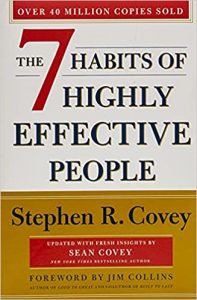
Buy “The 7 Habits of Highly Effective People” by Stephen R. Covey on Amazon
Buy “The 7 Habits of Highly Effective People” by Stephen R. Covey on BookDepository
Video summary of the books I recommend:
https://www.youtube.com/watch?v=Wb8KpHqU5tghttps://www.youtube.com/watch?v=y_Ol9Xy8HHMhttps://www.youtube.com/watch?v=ktlTxC4QG8g