Agile is now implemented in almost every organization and not only for software development.
Many leaders use it because everybody else is doing it, so it should be the best way to do things.
Then many believe it is a way to remove some functions and simplify the organization. By streamlining, they mean savings.
What is agile?
Some software developers introduced Agile, who believed they needed to evolve the process and method towards a more modern approach. They valued “individuals and interactions over processes and tools, working software over comprehensive documentation, customer collaboration over contract negotiation and responding to change over following a plan.”
Agile is based on tools and methodologies to achieve the said goals.
Agile is a time-boxed, iterative approach to software delivery that builds software incrementally from the start of the project instead of trying to deliver it all at once near the end.

Agile in organizations
Then everybody wanted to benefit from Agile around 2016 and adopt it at all layers of their organizations. Spotify has been taken as an example of such success for good and bad reasons. Organizations then try to change Agile mindset to adapt it to their own goals, which in many aspects are opposed.
Is agile new?
Agile is based on human behavior psychology, explaining how to get and achieve results based on clear goals, chunking, time-boxed, review, feedback, collaboration, establishing trust, etc.
Some believe Agile does not need infrastructure, and it is not correct; it is based on keeping things simple, not adding useless complexity. This principle is not new, and some call it KISS, Keep It Simple, and Stupid.

Agile is all about planning, regular and stand-ups ones.
Agile is not against project management. It is not a waterfall one waiting for a long-term output but based on smaller milestones to deliver features along with the timeframe and adjust if something is wrong. The Agile methodology is a way to manage a project by breaking it up into several phases, and it involves constant collaboration with stakeholders and continuous improvement at every stage.
Agile introduces collaboration. I don’t know where that one is coming from, as nobody forbids you to collaborate.
Agile is not new, and it is just adapting the results of human behavior studies to a methodology to gain efficiency and know where we are. Using it will avoid facing a tunnel effect and discover too late that what was done is not what was expected. At the same time, it will help develop the right mindset of a team.
Can Agile be used everywhere?
I have seen so many trying to tweak agile to make it work for everything. But it is not, and there are processes that, by essence, are very long. You are not always in control of everything you are working on (software from 3rd party vendors etc.).
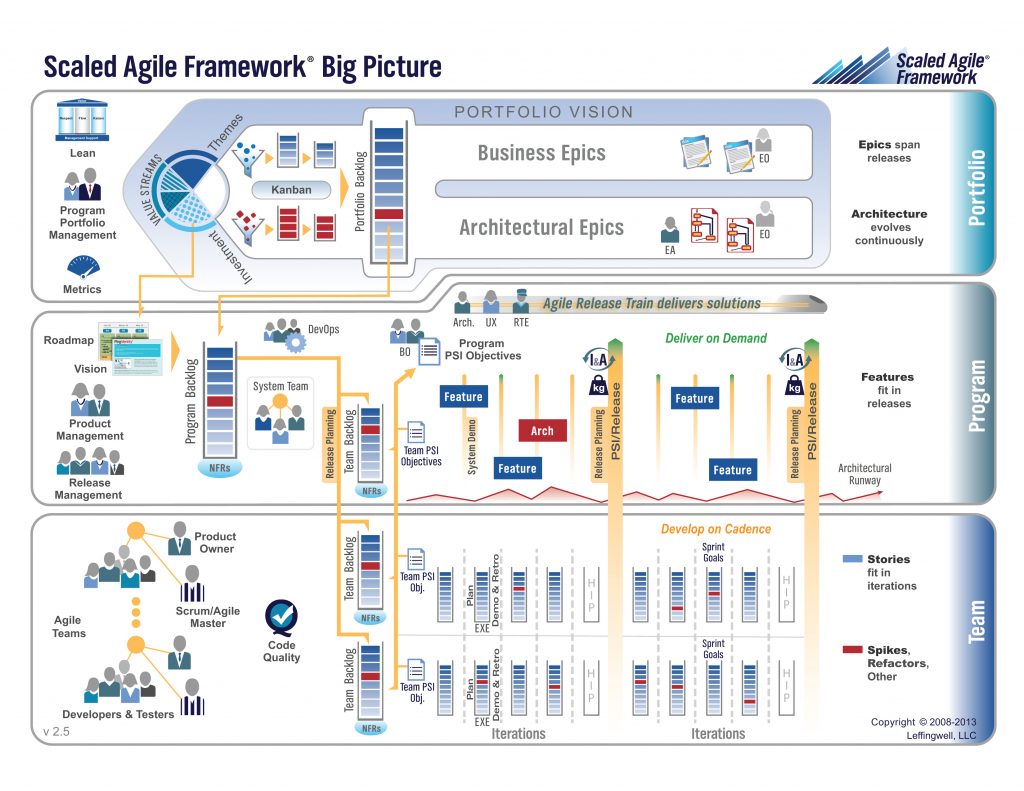
Because of this and the traditional structure and big organization, a new Agile model has been introduced: SAFE. What SAFE is: adapting Agile principles to traditional organization, multiplying the number of roles and processes.
The result is a monster, where nobody understands the reason for such setup, the original mindset does not exist anymore, nobody is in charge. The worst part is that nobody can measure the results and say if they are better at delivering value than before.

In software, you have many updates to propose new features, etc. What is happening is too many software are now full of bugs. Softwares are out with a lot of missing features just for being delivered. But who knows what is needed anymore?.
Managers are being removed, or at the opposite, many layers of new roles are introduced, diluting the accountability. Read my articles on what a manager is and why you need them.
Finally, many departments by essence will not gain from Agile. It will achieve just the opposite, less efficiency.
It is so wrong for a big corporation, and it has just created new business opportunities for consulting firms and coaches.
It is working well for startups focusing on one clear product. Based on these principles, many new businesses were created from scratch (AirBNB, Spotify). I insist they deliver one precise service or product.
What should be done?
Why people are essential and how to help them has been forgotten
Still, some good practices are efficient but are not Agile just human behavior very well described in many psychology studies: implement what is needed to be efficient, grow trust, build real teams, focus on the why, split your goals in smaller chunks, review and learn from your experiences, etc.

Maybe the success of Spotify is certainly not what your business needs. Every business is different, and everyone is different.
Can you measure any improvement vs. what you were doing before? No, and nobody is.
- To make it a success, you must:
- Be clear on your objectives.
- Adopt and adapt the agile tools to your objectives.
- Work only on what matters (benefits).
- Optimize your ecosystem through automation and tooling.
- Manage complexity.
- Focus on continuous improvement. Experiment and learn continuously.
- Have a clear management culture.
- Understand blockers in your company and adapt.
- Try tools from Agile, and keep the ones that are useful for you.
- Keep it simple.
- Focus on one project at a time, avoid multi-tasking.
Agile principles and tools are sound, but you will need to understand them, learn them, and adapt them where required.
It is good because it is based on human behavior and psychology to get the best from us.
Don’t be strict on your implementation; understand your constraints, and use the right tools to improve your team and its delivery if you cannot change them.
But if you want to adapt from your previous organization, forget it. You will end up with a monster even more complex than before.
If you cannot understand a diagram easily, it means it is too complex and inefficient: