

At school, we were learning new things every day but maybe not with the right approach and methods. Being older, many of us stop learning. Learning is key to growth whatever your age. It will keep you sharp, better and with a good mental health. To do so we should understand how to learn based on science.
Science is still evolving a lot as the brain on many aspects remain a mystery. Still, we know far more on the topic.
Indeed, learning is to understand how our brain is learning. How each region of the brain contributes to learning. Understanding short- and long-term memory and how both are connected.
A group of people developed a very interesting training to get this knowledge and improve our process on how to learn.
Learning How to Learn, taught by Dr. Barbara Oakley and Dr. Terrence Sejnowski is the best learning course on the topic.
I am trying to learn new topics regularly, and those methods and techniques are helping me to improve my learning.
The basics
A few basic habits must be in-place and used in order to put in-place the foundations for better learning.
Plan by doing weekly list and to-do list planned on the previous evening, organize your learning by chunking.
Have a routine: routine or habits enforce the way to learn. Follow your planning, start your planned learning with what could help and enforce it. For example, link it to another positive habit, start by a small step easy to achieve, have a dedicated place where you will learn, remove all notifications, have a clean working space.
Use the Pomodoro Technique: it will help to have a clear and dedicated time to learning. Use a timer and set it to 25mn, work on your task, rest your brain for at least 5mn. After 2 to 4 rounds, take a more extended break of 15-30mn.
The rest/break could be a physical activity (jumping jacks, squats, a short walk), reading something else, listening to music or a podcast, enjoying a sip of a drink (coffee, tea, fresh juices), practicing mindfulness (breathing exercise), a brief nap etc.
Focus on the process and not the product: enjoy the process to learn, have fun, enjoy the moment to learn and discover new things, do not focus on the result. The process of learning will be different for each topic. Some will be easy and some will take longer. By enjoying the process, you will remove the frustration of not achieving the result but enjoying every step and moment of the learning experience.
Make notes on what works and doesn’t: review and assess what is working and not working during your learning experience. We are all different. Some will need to listen to music, some will need to use some specific approach. Some will take more time than the others. By understanding what is best for you and trying different approach to learn, you will maximize your way of learning.
Sleep well: sleep is key to learning. It has been demonstrated many times now that it is best to learn a text before going to sleep and not in the morning. Sleep will help to enforce your learning (and not listening to something during your sleep). Sleep well is all about having a routine as well: have the same sleep schedule, go to bed early (seems the recent study tends to say the best is between 10 and 11pm), do quiet activities before going to sleep, eat at least 2 hours before sleep, remove electronics at least one hour before, do stretching and meditation before and or after sleep, get enough sun lights during the day (the best being early morning).
Techniques and strategies to learn better
Many techniques can be used to improve our learning.
Use real books, it will also improve your brain connections and you can even put notes directly in the book.
Learn in multiple and different ways: try many and note the ones that work best for you. Still, use many ways each time it will help to enforce your learning:
- Read out-loud: listening to your own voice will help. You can even try to sing or use different tones/voices.
- Rehearse the information both verbally and visually
- Teach others using your own words: if you are able to teach what you have learned to others, it means you know the topic.
- Takes active notes: a good method is to use the left side of a notepad to take standard notes and the right side, to put your comments, feelings, questions. The best way to take notes is to use the old technique of using a pen and paper. You will link more connections with your brain. Write, write, write. Jim Kwik is excellent at explaining how to take active notes.
- Use flash cards: it will enhance active recalls. Again, there are many ways to use them, experiment and find yours. It is linked with spaced repetition described below.
- Draw a mind map: it will help to visualize things with links between the main ideas and concepts.
- Use memory methods: anybody can improve its memory and many techniques exist to improve it. And it is fun.
- Use metaphors and analogies as visual as possible. It is creative, fun it will make it easy to remember things. Create your own.
- Use mnemonic: associate a term to a phrase, song, rhymes or a common item you are familiar with. Be positive and visual. Humor is a very good way to remember.
- Use recall tables
- Use the memory palace technique
By learning in multiple ways, you will activate all the regions of your brain and enforce your learning for long-term.
There are some techniques that should always be used as proven to be beneficial to all kind of learners.
Interleaving is a learning technique of learning several related topics together (example, learn geometry and algebra).
Practice, practice and practice – Practice make perfects, it is true. If you never practice, you never really learn. You never really improve. Practice again and again. Practice with different difficulties and approach. Make the practice interactive, review what was easy or difficult. The more your practice, the more you learn. The more your brain will fix the knowledge in your long-term memory.
Start by difficult topics. If stuck after 20min, switch to an easier topic or exercise and come back later to the difficult one. It will let your brain look for solutions in the backend. Test your new sills with difficult exercises.
Repetition, recall, consolidation: it is key in fixing information in long-term memory
Spaced-repetition learning: Learning is not a marathon, you will just end up exhausted with limited information really retained. By learning in different slots split over the week and the month, you will improve your learning. You will keep your brain fresh. And you will optimize your capacity to remember and keep information.
Split learning sessions in your week: as said, don’t do marathon sessions, you will be exhausted and not optimize your learning (you will get only some short-term learning). Brain breaks with physical exercises, watching TV, reading fiction books etc.
Everybody can learn better and more at any age. Try many approaches and techniques to improve your learnings, and find the ones that are best for you. Plan your day and weeks. Start with baby steps and small target, like 15min every day but at the same time, for example, every week day you learn piano for 15min at 6pm. I am experiencing every day different techniques, to find the best fit. I feel improvement over time, which is very rewarding.
Enjoy and have fun.
Recommended books to learn more:

Part of most beliefs, math and science are only for some. This book will give you the tools to break this myth and go beyond your own limit.
Buy a Mind for Numbers from Barbara Oakley on Amazon
Buy a Mind for Numbers from Barbara Oakley on Book Depository
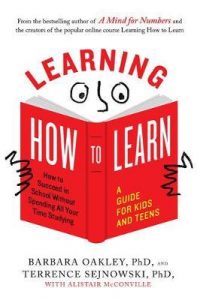
All you need on how to learn.
Buy How to Learn by Barbara Oakley on Amazon
Buy How to Learn by Barbara Oakley on Book Depository
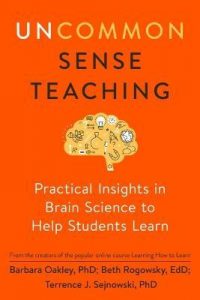
To extend your knowledge on how to learn,
Buy Uncommon Sense Teaching by Barbara Oakley on Amazon
Buy Uncommon Sense Teaching by Barbara Oakley on Book Depository
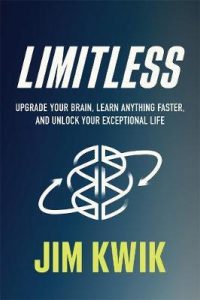
Go beyond your perceived limitations. Develop your superpowers.